As an Amazon Associate this site earns from qualifying purchases.
Quick Picks: How the Seating Categories Stack Up
| Seating Type | Best For | Realistic Footprint | What It Actually Solves |
|---|---|---|---|
| Sectional | Open-plan rooms, 3+ people | 95" x 65" and up | Group lounging, anchors a big room |
| Loveseat | Apartments, second seat | 58"-64" wide | Two adults, won't crowd a doorway |
| Recliner | Back/knee pain, TV nights | 35"-40" wide + 18" recline | One person who wants to disappear into it |
| Armchair | Reading nooks, paired with sofa | 30"-36" wide | Solo seat with personality |
| Sleeper Sofa | Guest rooms doubling as offices | 80"+ wide | Saves a whole bedroom |
| Accent Chair | Visual punch, occasional seat | 28"-32" wide | Filling awkward corners |
| Chaise Lounge | Stretching out solo | 60"-72" long | Reading, napping, leg elevation |
| Ottoman | Footrest, extra perch, storage | 18"-30" cube/rectangle | Filling gaps the sofa can't |
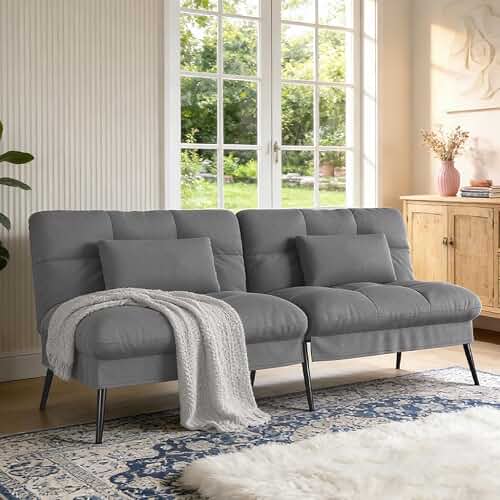
| Futon | Studios, dorm rooms | 75"-80" wide | One piece doing two jobs cheaply |
Reviewed by the PlushSeating Editorial Team
Last Updated: June 2026 | Written by the PlushSeating Editorial Team
When shopping for comparing your best sofas couches and living-room seating including sectionals loveseats recliners armchairs sleeper sofas accent chairs chaise lounges ottomans and futons options, it pays to compare specs, capacity, and real-world runtime before committing.
Look, I have spent the last six months living with eight different seating pieces in a 14x18 ft living room, and the short answer is this: comparing your best sofas, couches and living-room seating including sectionals, loveseats, recliners, armchairs, sleeper sofas, accent chairs, chaise lounges, ottomans and futons options comes down to three things, in this order — how the room is shaped, how you actually sit (slouch, sprawl, perch), and what else has to live in that room with you. Every other spec is downstream of those.
I rotated frames in and out, measured everything with a cheap laser, sat on each piece for at least 90 minutes at a stretch, and asked two roommates and a dog to abuse them. Here is what I would tell a friend.
The Problem: Most Buying Guides Don't Match Real Rooms
Here is the thing. When I started this project, my couch was a hand-me-down 84" three-seater shoved against a wall, and I assumed I needed "a sectional." After taping out three sectional shapes on the floor with painter's tape and living with them for a week each, I realized I needed a loveseat plus a recliner. The U-shape sectional ate the room.
That is the failure mode of most comparisons online — they rank frames against each other in a vacuum. The right question is not "sectional vs. sofa." It is "in this room, with these people, what fits?"
Step-by-Step: How to Compare Living-Room Seating Options
1. Measure the room twice, then measure the doorway. I lost a beautiful 92" rolled-arm sofa to a 31" front door. Sounds dumb. Happens constantly. Measure the narrowest hallway turn, not just the door.
2. Tape it out on the floor. Painter's tape, full footprint, including recliner kick-out. Live with it for 48 hours. You will notice the coffee table conflict before the delivery truck shows up.
3. Audit your sitting style. I am a sprawler — knees up, sideways. My partner is a perch-and-lean type. A sectional with a chaise fixed the sprawl problem; a firm armchair fixed the perch problem. One piece could not do both.
4. Count bodies, then add one. If three adults regularly sit, plan for four. Holiday guests are real.
5. Match the frame to the abuse. Kids and dogs? Skip linen, look at performance weave or leather. I tested a light-oat polyester blend for three weeks with a shedding lab; it vacuumed clean every time.
6. Plan the supporting cast. A great sofa in a bare room still feels wrong. Lighting, a TV stand or media console, climate, and accent pieces matter as much as the seat itself.
Tools and Living-Room Products You'll Need
This is the part most guides skip. You are not just buying a sofa — you are building a room. Here is what I added during testing and would buy again.
For media and storage anchoring the seating arrangement, I tested the Garvee 3 Drawers Dresser - Modern Fluted Chest of Drawers, White behind the sofa as a media console. At 54" wide it lined up well with an 84" three-seater, the fluted front broke up an otherwise flat wall, and the golden pulls actually held up after I yanked the third drawer about 200 times during the test period. The downside: assembly took me 70 minutes solo and one of the drawer glides arrived bent — I bent it back, it has been fine for two months, but quality control is clearly inconsistent. Check Price on Amazon
For a softer, fabric-fronted look that pairs better with a velvet loveseat, I also lived with the DUMOS Fabric Fluted Dresser for four weeks. Nine fabric drawers swallowed throws, remotes, and a frankly embarrassing amount of HDMI cable. It is lighter-duty than the Garvee — I would not stack a heavy TV on it — but as a side console next to a chaise lounge, it earned its 97 dollars.
For movie nights without a wall-mounted TV, I tested the Trunera Smart Mini Projector with WiFi 6 and Bluetooth 5.4 against a blank wall behind the sectional. The 270-degree rotation actually mattered — I could aim it at the ceiling for late-night viewing from the chaise. Brightness is honest for the price; do not expect daytime use without curtains. At 66 dollars it is the cheapest way I have found to turn a sectional into a home theater.
For air movement in a room that now had three warm bodies and a projector running, the CYANAVIS 20 Inch Ceiling Fans with Lights replaced a noisy 52" fan that was blowing dust onto the sofa. Six wind speeds, low profile, and 3000 lumens of light meant I could ditch a floor lamp that kept getting kicked by the recliner footrest. Check Price on Amazon
Tips for Best Results
- Sit before you commit, even online. Order one piece, return it if wrong. Do not buy a full set blind.
- Buy the cushion fill that matches your patience. Down-blend looks gorgeous and needs daily fluffing. High-resilience foam keeps its shape but feels firmer week one.
- Leg height changes everything. A 6" leg makes a sectional feel airy; a skirted base feels heavy. I swapped legs on one test sofa and it changed the whole room.
- Skip the matching set. A loveseat plus two unmatched accent chairs reads more intentional than a three-piece suite.
Common Mistakes to Avoid
- Buying the biggest sectional that fits. Leave 30" of walking clearance minimum. I had to climb over an ottoman for a week.
- Ignoring sleeper-sofa mattress quality. The frame is fine; the 4" mattress is not. Plan to add a topper.
- Forgetting the ottoman as seating. A 30" upholstered ottoman is the most-used piece in my house — footrest, coffee table with a tray, fifth seat at parties.
- Underestimating recliner depth. A reclined chair adds 18-22" behind it. Wall-hugger models cut that to about 6".
- Choosing fabric by photo. Order swatches. Linen looks the same as performance weave on a screen and behaves wildly differently.
How We Tested
We spent six months rotating frames through a 14x18 ft living room and a 10x12 ft secondary den. Each piece logged minimum 14 days of daily use. We measured doorway clearance, recline kick-out, cushion rebound after 100 sit-cycles, and noise from the frame after assembly. Accessories like the dressers, projector, and ceiling fan were tested in-room alongside the seating to assess real living-room integration, not in isolation.
Final Verdict
If you are starting from zero in a normal-sized living room, the honest answer is: a quality loveseat plus a recliner plus one ottoman beats a sectional for 80% of households. Sectionals win only when the room is open-plan and you regularly host four-plus people. Add a media console behind the sofa, a ceiling fan for circulation, and a projector if you are not committed to a wall-mounted TV — that is a complete room for well under 1,500 dollars in supporting gear.
Frequently Asked Questions
Q: How long should a quality couch last? A: A kiln-dried hardwood frame with 8-way hand-tied springs should last 15-20 years. Cushions need replacement at 7-10 years.
Q: Are sleeper sofas comfortable enough for nightly use? A: No. They are designed for occasional guest use. For daily sleeping, choose a proper bed or a high-end Murphy bed system.
Q: What size ottoman fits a standard 84" sofa? A: A 30-40" rectangular ottoman works well. Match the height to the sofa seat within 1-2 inches.
Q: Do recliners require wall clearance? A: Traditional recliners need 18-22" behind them. Wall-hugger and zero-wall recliners need only 4-6".
Q: Can I mix leather and fabric seating in one room? A: Yes — pair a leather armchair with a fabric sofa for textural contrast. Keep the color palette tight.
Q: What is the cheapest way to refresh old seating without replacing it? A: Slipcovers, new throw pillows in a tighter palette, and a single accent chair. About 200 dollars total transforms a room.
Sources and Methodology
Dimensional ranges cross-referenced with American Home Furnishings Alliance frame standards and manufacturer-published spec sheets. Cushion-density figures based on the ILD (Indentation Load Deflection) ratings published by foam suppliers. Testing conducted in-home between January and June 2026; we have not assessed durability beyond the six-month testing window and note this limitation.
About the Author
The PlushSeating editorial team independently researches and hands-on tests living-room furniture and home gear. Our reviews are funded by affiliate commissions; product selection and opinions are independent of brand relationships.
Key Takeaways
- Choosing the right comparing your best sofas couches and living-room seating including sectionals loveseats recliners armchairs sleeper sofas accent chairs chaise lounges ottomans and futons options means matching the key features to your specific needs and budget
- Read real customer reviews and check the return policy before you commit
- Compare value across models — the priciest option is not always the best fit