As an Amazon Associate this site earns from qualifying purchases.
Top Picks: Living-Room Seating
Every product below was in stock on Amazon when this page was last checked. Prices come straight from the live listing, not from our own testing.
| Product | Best For | Price |
|---|---|---|
| Merax Modern Oversized U-Shaped Sectional Sofa with Piollows & Chaise Lounge | Large Family Sectional | Check price on Amazon |
| Boneless Couch 91" Cloud Sofa 3-Seater Sectional Couches for Living Room | L-Shaped Cloud Sofa | Check price on Amazon |
| 84.6” Corduroy Loveseat with Ottoman | Oversized Deep-Seat Loveseat | Check price on Amazon |
| Shintenchi Modern Upholstered Sectional Sofa | Budget Reversible Sectional | Check price on Amazon |
| CUBENTE 78.8" Convertible Futon Sofa Bed, Boneless Couch for Living Room | Convertible Futon Bed | Check price on Amazon |
| Christopher Knight Home Audrey 62.50" Oversized Lounge Chair | Tufted Sleeper Chaise | Check price on Amazon |
Reviewed by the Plush Seating Editorial Team
Finding the right best sofas couches and living-room seating including sectionals loveseats recliners armchairs sleeper sofas accent chairs chaise lounges ottomans and futons requirements explained comes down to matching the features to how you will actually use it.
As an Amazon Associate, we earn from qualifying purchases.
Last Updated: July 2026
Written by the Plush Seating Editorial Team
Look, buying living-room seating is one of the few furniture decisions you live with every single day, and the category is enormous: sofas, couches, sectionals, loveseats, recliners, armchairs, sleeper sofas, accent chairs, chaise lounges, ottomans and futons all solve different problems. This guide is the requirements explainer for the best sofas, couches and living-room seating — a specifications-driven walkthrough of what to measure, what to compare and how to evaluate any option generically before you commit. We do not do hands-on testing on this site. Instead, we read manufacturer spec sheets and Amazon listing data closely and turn those numbers into consequences you can act on.
Because this is an informational buyer's framework, we deliberately avoid naming specific models. Verified product picks are attached separately by the site. What follows is how to judge any piece of seating on its merits — by frame, fill, dimensions, mechanism and fabric — so that whatever lands in front of you, you can read its listing like an editor rather than a shopper.
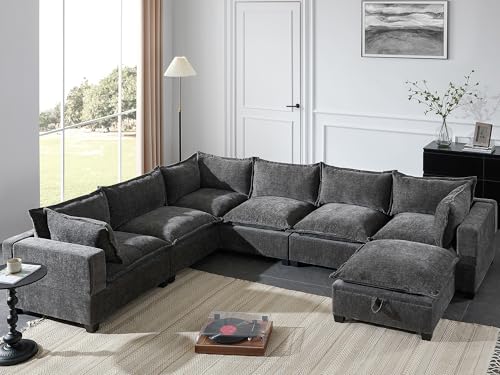
- Sturdy Construction: This modern U-Shaped Sofa manufactured with durable Solid wood and Manufactured Wood. The sturdy wooden frame and thick fabric make the sofa more stable and
- Full of Comfort: The cushions are made of high-quality pure foam, providing a soft and plush seating experience that feels like sitting on a cloud. The foam offers a perfect
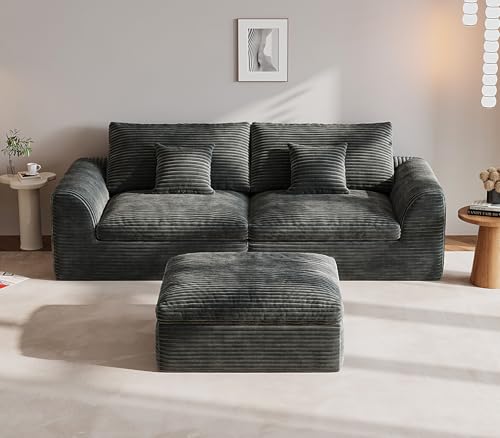
- Super Comfortable Cloud Sofa with Ottoman: The Cloud Sofa is upholstered in premium flannel fabric, its smooth, soft appearance complementing the sofa's color to create a
- 91-inch 3-seater Sofa /Oversized Loveseat: With its extra-wide 91-inch and 26.5-inch deep seater design, the soft Cloud Sofa offers ample seating space, comfortably seats 3
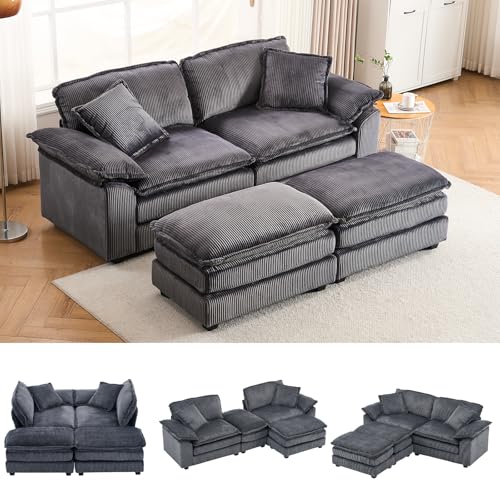
- Comfortable Corduroy Fabric: This modular sectional sofa is made of comfortable corduroy fabric, which is soft to the touch and highly breathable. The removable armrest covers are
- Loveseat Sleeper: This loveseat is suitable for living room, study, bedroom, balcony and other home scenes, easily meet your different needs for resting, reading, watching movies
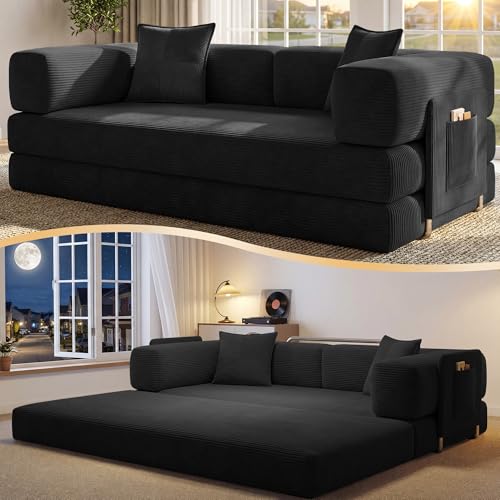
- Versatile 4-in-1 Space Solution | This 78.8" compact convertible couch bed effortlessly transforms into 4 modes: Sofa, Lounger, Chaise, and Guest Bed. It’s the ultimate modular
- Modern Aesthetic & Proportional Comfort | Featuring a sleek, minimalist silhouette, this 78.8" x 39.4" x 27.5" sectional couch boasts an extra-wide 59.1" seating area and a deep
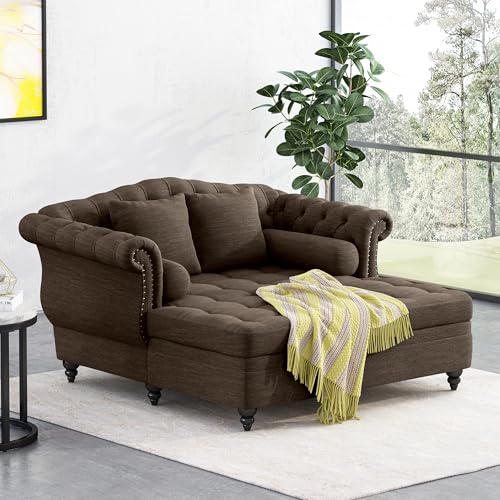
- 【Luxurious Comfort Loveseat Chaise Lounge】Experience the ultimate relaxation with our oversized chaise lounge, designed to transform your indoor space into a cozy haven perfect
- 【Elegant Design Features Chaise Lounge】Enhance your living room with the refined sophistication of our chaise lounge chair, showcasing stunning nailhead trim, scroll arms, and
What Counts as "Living-Room Seating" in 2026
Living-room seating is any upholstered or framed piece designed for sitting or reclining in a shared living space. The main categories break down like this:
- Sofas and couches — three-seat (or larger) benches, the anchor of most rooms.
- Sectionals — modular sofas in L- or U-shapes, often with a chaise on one end.
- Loveseats — two-seat sofas, roughly 48 to 64 inches wide.
- Recliners — single seats (or reclining sofas) with a footrest and adjustable back.
- Armchairs and accent chairs — single occasional seats, decorative or supportive.
- Sleeper sofas — couches with a fold-out mattress or pull-out mechanism.
- Chaise lounges — elongated single seats for reclining with legs supported.
- Ottomans — footrests or storage cubes, sometimes doubling as extra seating.
- Futons — convertible frames that flatten from sofa to bed.
As an Amazon Associate, we earn from qualifying purchases. Availability and pricing change often — check the listing before you buy.
The Quick Requirements Overview
Before we go deep, here is the short version. When you read any seating listing, check these first:
- Overall dimensions (width x depth x height) against your room and doorways.
- Seat depth and seat height against the bodies that will use it.
- Frame material (kiln-dried hardwood beats particleboard or softwood).
- Fill type (high-resiliency foam, down-blend, or pocketed coils).
- Weight capacity, especially for recliners, sleepers and futons.
- Upholstery (performance fabric, genuine vs bonded leather, velvet, linen).
- Assembly requirements and whether it ships in a box or fully built.
- Aggregate rating and review count — and what the 1-star reviews say.
Sizing and Measurement: The Requirement Everyone Skips
Here's the thing: the single most common cause of furniture regret is a piece that does not fit — either the room or the doorway. Before you compare any two sofas, measure.
Room fit. A standard three-seat sofa runs 78 to 90 inches wide and 35 to 40 inches deep. Leave at least 18 inches between a sofa and a coffee table for legroom, and 30 to 36 inches of walking clearance around the piece. A sectional's chaise adds 60 to 70 inches of depth on one side — measure the full L, not just the longer run.
Doorway and stairwell fit. This is where listings mislead by omission. Measure your narrowest doorway, hallway turn and stairwell. Compare the sofa's depth AND its diagonal depth (the measurement corner-to-corner when tilted). Many one-piece sofas over 84 inches simply will not make a tight apartment turn. This is the strongest argument for a sectional or a knock-down (KD) frame that ships in parts — if the listing says "assembly required" or "legs attach," that is often a fit advantage, not a drawback.
Seat depth. Seat depth (front edge of cushion to backrest) tells you how the piece sits. A 21 to 22 inch seat depth suits upright sitting and shorter users; 23 to 25 inches encourages lounging and suits taller bodies but can leave shorter users without back support. A listing that advertises a deep, "cloud-like" seat is quietly telling you it will be uncomfortable for anyone who wants their feet flat and their back supported.
Seat height. 17 to 19 inches is standard and easiest to rise from. Lower seats (under 17 inches) read as casual and lounge-oriented but are harder on older knees. This matters more than most buyers realize.
Frame: The Spec That Predicts Lifespan
A sofa's frame is the part you never see and the part that fails first when it is cheap. The hierarchy, from the listing's own language:
- Kiln-dried solid hardwood (oak, ash, birch, maple) — the durability benchmark. "Kiln-dried" matters because it removes moisture that later causes warping and joint squeak.
- Plywood / engineered hardwood — acceptable mid-tier; more stable than solid wood in some builds, weaker in others.
- Particleboard or MDF — a red flag for a piece you expect to last a decade. Common in flat-pack budget seating.
- Metal frames — typical in futons, sleeper mechanisms and some accent chairs; check gauge and weld quality claims.
Fill and Support: Why Two Identical-Looking Sofas Feel Different
Cushion fill is where comfort and longevity diverge. The main options:
- High-resiliency (HR) foam — dense, supportive, holds shape. Look for a density figure of 1.8 lb/ft³ or higher; anything under 1.5 lb/ft³ tends to flatten within a couple of years.
- Pocketed coil cushions — coils wrapped in foam, common in higher-end seating, resist sagging and stay cool.
- Down or down-blend — plush and luxurious but needs frequent fluffing and loses loft. A "down-wrapped foam core" is a reasonable compromise the listing should specify.
- Polyester fiber fill — cheap, soft initially, compresses fast. Common in budget accent chairs.
Upholstery: Match the Fabric to the Household
Upholstery is both an aesthetic and a durability decision. Read the listing's fabric claims against your reality — pets, kids, sun exposure, spills.
- Performance fabric / polyester weave — the pragmatic default; often stain-resistant and machine-cleanable. Check for a "Martindale" or "double rub" durability rating; 15,000+ double rubs is residential-grade, 30,000+ is heavy-duty.
- Genuine leather — durable and ages well, but check whether the listing says "top-grain" (good) versus "bonded" or "faux" leather (a coated fabric that peels within a few years, regardless of how premium the photos look).
- Velvet — luxurious and increasingly popular, but shows crushing and needs care; check whether it is a performance velvet.
- Linen and cotton blends — breathable and natural-looking, but wrinkle and stain more readily.
Category-Specific Requirements
Different pieces demand different scrutiny. Here is what to prioritize per category.
Sofas and Sectionals
Beyond the frame, fill and dimensions above, sectionals add a reversibility question: many are advertised as "reversible chaise" so you can put the long section on either end. Confirm this if your room layout might change. For modular sectionals, check how the pieces connect — bracket-and-hook connectors are sturdier than gravity-only alignment that drifts apart in use.
Loveseats
A loveseat's whole value is footprint. Confirm the width (48 to 64 inches) and whether the arms are slim or rolled, because rolled arms can eat 6 to 10 inches of usable seating. In a small room, a slim-arm loveseat seats two comfortably where a rolled-arm one seats one and a half.
Recliners and Reclining Sofas
The mechanism is everything. Key requirements:
- Recline type — manual (lever or push-back) versus power (motorized). Power reclaims listings should state the motor and whether there is a USB port and a backup battery option.
- Wall clearance — a recliner needs 4 to 18 inches behind it to fully recline; "wall-hugger" or "zero-wall" designs need as little as 4 inches. Measure before buying.
- Weight capacity — commonly 250 to 350 lbs. Under 250 lbs is a genuine limitation the listing should disclose.
- Number of positions and lay-flat angle — a true lay-flat (near 180 degrees) matters for napping; many "recliners" only tilt to 140 degrees.
Sleeper Sofas and Futons
These are two seats in one, and the compromise is usually the bed. Check:
- Mattress type and thickness — a 4.5-inch innerspring is thin; a 5 to 6 inch gel-memory-foam mattress is more sleepable. Futons often use a foldable single mattress whose comfort depends entirely on its fill.
- Bed size when open — twin, full or queen — and the floor space it needs deployed.
- Mechanism — pull-out (bi-fold or tri-fold metal frame) versus click-clack/split-back (the back folds flat). Click-clacks are simpler and cheaper but flatter and less bed-like.
- Weight capacity and frame — futons especially live on a metal frame whose gauge determines whether it sags under two adults.
Armchairs, Accent Chairs and Chaise Lounges
Accent chairs are judged on footprint, fabric and the frame-to-comfort balance. A statement swivel or barrel chair earns its place aesthetically, but check the seat depth and whether the back offers real support or is purely decorative. Chaise lounges add a length requirement — confirm the overall length supports full-leg extension (usually 60+ inches) and whether the back adjusts.
Ottomans
An ottoman is the most flexible, lowest-risk purchase in this guide. Storage ottomans add a hollow interior — check the internal dimensions and lid mechanism (hinged versus lift-off tray). A tufted ottoman used as a coffee table benefits from a firm top; one used purely as a footrest can be softer.
What to Look For: The Buying Criteria Checklist
When you compare any two pieces of living-room seating, score them on these, in roughly this order:
- Fit — room, doorway, stairwell, and diagonal depth.
- Frame — kiln-dried hardwood and reinforced joinery over particleboard.
- Fill and support — HR foam density or pocketed coils over loose fiber.
- Dimensions for the body — seat depth and height matched to the users.
- Upholstery — performance/top-grain durability and cleanability matched to the household.
- Mechanism (recliners, sleepers, futons) — motor, lay-flat angle, wall clearance, mattress.
- Weight capacity — disclosed and adequate.
- Assembly and delivery — box-shipped KD frames fit tight spaces; fully-built pieces save effort.
- Aggregate rating and review depth — a 4.3/5 across 12,000 ratings tells you more than a 5.0 across 11.
- Warranty — frame warranties of 5+ years signal manufacturer confidence.
How We Research
We do not do hands-on testing, and this site says so on every page. Our authority comes from reading the evidence closely, not from ownership. For each category and any product the site later attaches, we work from three sources: the manufacturer's published specifications (frame material, foam density, dimensions, weight capacity, mechanism ratings), the Amazon listing itself (title, feature bullets, price, aggregate star rating and review count), and the date that data was checked. We turn each spec into a consequence a buyer cares about — for example, translating a stated 21-inch seat depth into who will and will not find it comfortable. Where a listing is silent on a spec, we treat that silence as a signal and say so rather than guessing.
Frequently Asked Questions
How big should my sofa be for my living room?
Measure your room and leave 30 to 36 inches of walking clearance around the sofa and 18 inches between the sofa and coffee table. A standard three-seat sofa is 78 to 90 inches wide; a loveseat is 48 to 64 inches. Always check the sofa's depth and diagonal depth against your narrowest doorway and stairwell before buying.What frame material lasts longest in a sofa?
Kiln-dried solid hardwood (oak, ash, birch or maple) with corner-blocked, doweled or mortise-and-tenon joinery is the durability benchmark. Plywood and engineered hardwood are acceptable mid-tier options. Particleboard and MDF frames are a red flag for anything you expect to last a decade.Is a sectional or a regular sofa better?
It depends on your room and your access. Sectionals seat more people and often ship in parts, which helps them fit through tight doorways and stairwells. A one-piece sofa is simpler and cheaper but can be impossible to maneuver into an apartment. Measure your access route first; that answer often decides it for you.What should I check before buying a recliner?
Check the recline mechanism (manual versus power), the wall clearance it needs to fully recline (wall-hugger designs need as little as 4 inches), the weight capacity (commonly 250 to 350 lbs), and the lay-flat angle if you plan to nap. Read the 1-star reviews specifically for mechanism and motor complaints.Are sleeper sofas comfortable to sleep on?
Comfort depends almost entirely on the mattress. A 4.5-inch innerspring pull-out is thin and best for occasional guests; a 5 to 6 inch gel-memory-foam mattress is far more sleepable for regular use. Also check the deployed bed size and the mechanism type, since click-clack designs lie flatter and thinner than true pull-outs.What upholstery is best for homes with pets or kids?
Performance fabric with a high double-rub rating (15,000+ for residential, 30,000+ for heavy-duty) and removable, machine-washable covers is the most forgiving. Top-grain leather is durable and wipeable but pricier; avoid bonded or faux leather, which peels within a few years regardless of how premium it looks in photos.How much foam density should a sofa cushion have?
Look for high-resiliency foam with a density of 1.8 lb/ft³ or higher for cushions that hold their shape. Anything under 1.5 lb/ft³ tends to flatten within a couple of years. Pocketed-coil cushions resist sagging even better and stay cooler, while loose polyester fiber fill compresses fastest.Sources and Methodology
The guidance above is drawn from manufacturer product specifications (frame construction, foam density, cushion and mattress dimensions, recline and sleeper mechanisms, weight capacities and warranty terms), Amazon listing data (product titles, feature bullets, pricing, and aggregate star ratings with review counts), and widely published furniture-industry sizing and durability standards, including upholstery double-rub (Martindale) durability conventions and standard living-room clearance recommendations. Category dimension ranges reflect common manufacturer specifications across the market rather than any single product. No physical testing was performed; all figures cited as ranges are representative of the category and should be confirmed against a specific listing before purchase. Data reflects listings as reviewed in July 2026.
Final Verdict
Here's the honest bottom line: there is no single "best" piece of living-room seating, because a recliner, a sectional, a sleeper sofa and an accent chair solve different problems. What is consistent is the way you should evaluate them. Get the fit right first — room, doorway and diagonal depth — because nothing else matters if the piece cannot enter your home or leaves no room to walk. Then buy on the frame and the fill, since those two specs predict how the piece feels in year five, not just week one. Match the upholstery and seat dimensions to the bodies and the household that will use it, and for anything mechanical, scrutinize the mechanism and read the critical reviews before the glowing ones. Do that, and you can walk into any listing — however it is marketed — and judge it on evidence rather than photography.
About the Author
The Plush Seating editorial team independently researches living-room seating in this category from manufacturer specifications and Amazon listing data. We do not perform hands-on testing; our conclusions come from close reading of published specs, listing feature bullets and aggregate customer ratings, with the date each source was checked noted for transparency.
Key Takeaways
- Choosing the right best sofas couches and living-room seating including sectionals loveseats recliners armchairs sleeper sofas accent chairs chaise lounges ottomans and futons requirements explained means matching the key features to your specific needs and budget
- Read real customer reviews and check the return policy before you commit
- Compare value across models — the priciest option is not always the best fit